

Custom Web Application Development Built Around Your Business — Not a Template
We build web applications from scratch designed around how your business actually works, not bent to fit an off the shelf product.
Grows With You
Architecture designed to handle more users, more data, and more features without requiring a rebuild.
Built for Your Workflow
Every feature is developed to fit the way your team and your customers actually operate not the other way around.
Secure by Default
Security isn't added at the end. Encryption, access controls and vulnerability checks are built in from the first line of code.
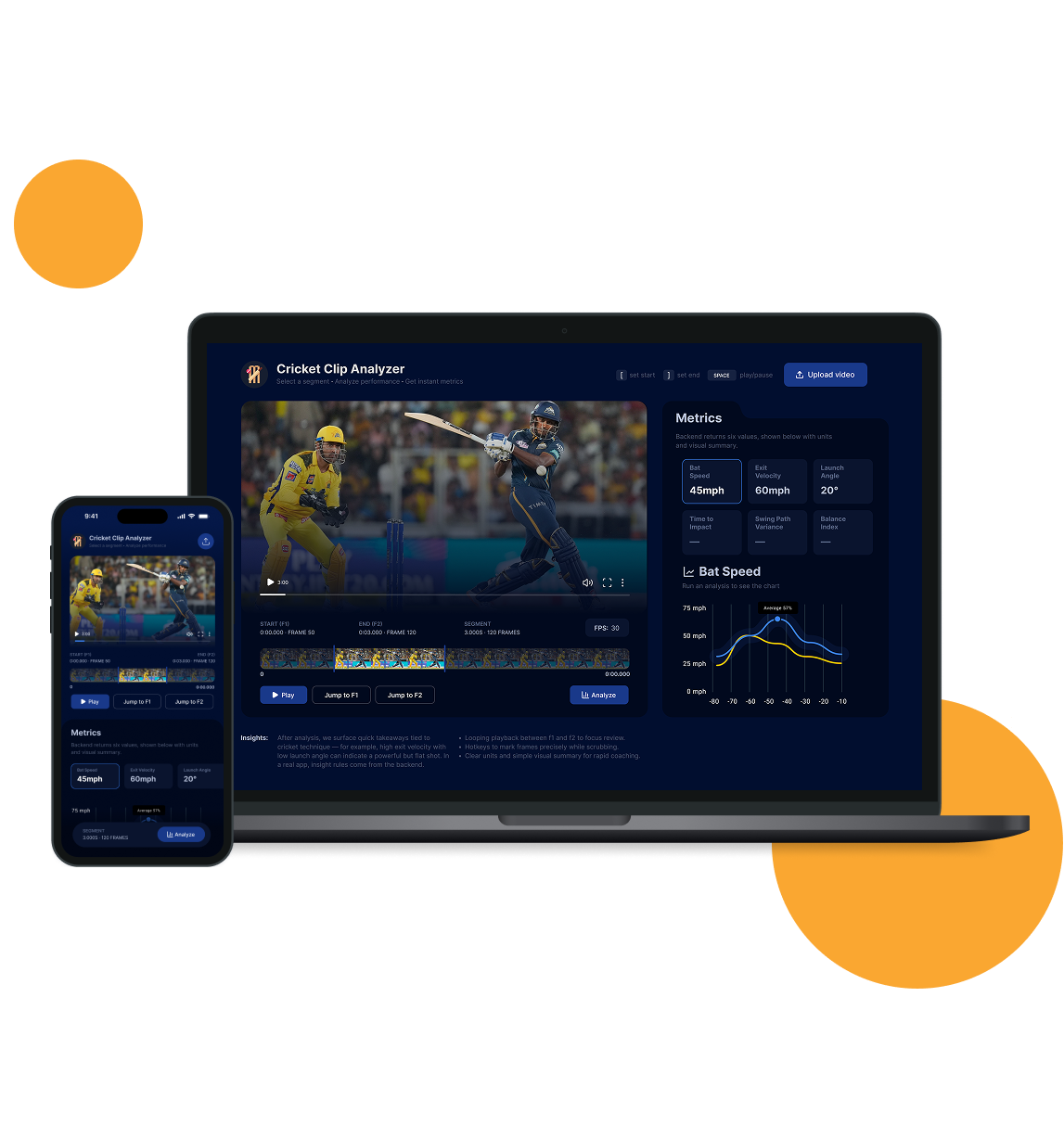
Why Businesses Choose Custom Web Development Over Off-the-Shelf Tools
Ready made platforms work well until your business needs something they were not designed for. The moment you need a specific workflow, a non standard integration or a user experience that reflects how your customers actually behave, a custom web application is the cleaner solution. We have built them for businesses across retail, healthcare, finance, education, logistics, and SaaS each one different, each one built to solve a specific problem.
Built From Scratch for Your Business
No adapting your processes to fit someone else's software. We start with how you work and build the application around that every screen, every workflow, every data structure.
Designed to Scale Without Starting Over
We build with growth in mind whether that means 10x the users, new product lines or integrations you haven't planned yet. The foundations hold when the business expands.
Interfaces People Actually Want to Use
We design based on how real users navigate, not on what looks good in a demo. Intuitive flows mean less training, fewer support tickets, and higher adoption rates.
Security Built In — Not Added Later
Authentication, encryption, input validation, access control all handled during development, not as an afterthought. Applications go through security testing before they go live.
Industries We've Built For — and What We've Learned from Each
We have worked across enough industries to know that the same solution rarely translates directly from one sector to another. A healthcare portal has compliance requirements an eCommerce platform doesn’t. A logistics dashboard needs real time data handling that a CMS driven site never will. Here’s where we’ve built, and what that experience has taught us.
- eCommerce
Product pages that load fast, checkout flows that don’t leak customers and inventory systems that stay in sync across every channel.
- Healthcare
Patient portals, appointment booking and care management tools built with the data security and compliance requirements the sector demands.
- Finance
Platforms where accuracy is non negotiable built for transaction handling, regulatory requirements, and the trust that financial brands depend on.
- Education
LMS platforms, student portals, and course delivery tools that work across devices and make it easy for learners to stay enrolled and engaged
- Real Estate
Property search, listing management and lead capture tools built for the way buyers research and agents close fast, filterable and mobile first.
- SaaS
Product websites and app infrastructure built for trial to paid conversion, user onboarding and the kind of performance SaaS customers expect on day one.
- Logistics
Tracking dashboards, shipment management tools and operational interfaces that give teams real time visibility into what’s moving and what isn’t.
- Social Networking
Member platforms built for the specific community you’re trying to create profiles, feeds, messaging and moderation tools that scale with engagement.
- On-Demand Services
Booking and dispatch systems where speed and reliability matter customers expect real time confirmation and providers need tools that work in the field.
- Entertainment
Content platforms optimised for fast delivery, smooth streaming and the kind of experience that keeps audiences coming back rather than switching tabs.
Types of Web Application — and When to Use Each One
Not every business needs the same kind of web application. A marketing heavy startup needs something different from an enterprise managing internal workflows. These are the application types we build most frequently with a plain language explanation of what each one actually does and the scenarios where it makes sense.
Progressive Web Applications
A PWA runs in the browser but behaves like a native app it can work offline, send push notifications, and be added to a home screen. The benefit, you reach mobile users without the cost and maintenance of separate iOS and Android builds.
Single Page Applications (SPAs)
Content updates dynamically as users interact no full page reloads, no waiting. SPAs are ideal for dashboards, internal tools and data heavy interfaces where speed and responsiveness matter more than static content.
Enterprise Web Applications
Built for organisations managing high volumes of data, complex user roles and large internal teams. These need robust access controls, audit trails and the kind of reliability that means downtime is not an option.
eCommerce Applications
Custom online stores built around your specific product catalogue, fulfilment process and customer journey with payment integrations, inventory management and conversion focused design built in from the start.
Content Management Systems
A CMS driven site gives your team direct control over content publish pages, update copy, add media without requiring a developer for every change. We build on WordPress, custom headless CMS setups or whichever platform fits your workflow.
Customer Portals & Dashboards
Give your clients their own login to track orders, download documents, manage subscriptions, or access support. Reduces inbound queries and gives customers the self service experience they expect.
Collaborative Platforms
Internal tools for distributed teams task management, shared workspaces, communication threads, and file management all in one controlled environment your IT team doesn't have to beg a third party to customize.
Social Networking Applications
Member profiles, content feeds, messaging and engagement tools built for a specific community not a Facebook clone but a platform designed around the exact interactions your users need to have.
Learning Management Systems
Course creation, student enrolment, progress tracking, assessments and certificate delivery — structured so instructors can focus on teaching and learners can focus on learning, without fighting the interface
How We Build
Every web application project we take on follows the same seven stage process not because we’re rigid, but because skipping stages is how projects end up over budget, late, and built for the wrong thing. Here’s what happens at each stage, what you’ll see from us and what you’ll walk away with.
We Learn the Business Before We Touch the Brief
Stakeholder interviews, competitive landscape review, user research we spend time understanding what your business actually needs before anyone writes a line of code or draws a wireframe. What comes out of this stage shapes every decision that follows.
You get:
A project requirements document, agreed success metrics, user personas and a technical feasibility review.
Design That Works Before It Looks Good
Wireframes come before visual design. We map how users will move through the application where they'll land, what they'll do and where they'll drop off if we get it wrong and test that logic before any polish goes on top of it.
You get:
User journey maps, wireframes, high fidelity UI designs and clickable prototypes reviewed and approved before development begins.
Planning the Architecture Before a Line Is Written
A poorly planned database schema or a flimsy API structure will cost five times as much to fix after launch as it does to get right before. We plan your system architecture properly database structure, API design, third party integrations, and the infrastructure decisions that affect everything downstream.
You get:
System architecture documentation, database schema, API specification and a scalability plan.
Development in Sprints — So You See Progress, Not Just Promises
Frontend and backend development run in coordinated sprints. You see working builds at regular intervals not a big reveal at the end. Code is clean, documented and written so a future developer or your own team can read and maintain it.
You get:
Regular sprint demos, a responsive frontend, a functional backend, database integration and performance optimised code.
Testing the Edge Cases, Not Just the Happy Path
We test functional behaviour, security posture, load performance, cross browser compatibility and the user flows that fall outside the obvious scenarios. Real users always find the edge cases we find them first.
You get:
Test case documentation, security assessment, performance benchmarks, and compatibility report across major browsers and devices.
Deployment Handled End to End — With Monitoring From Day One
We manage server configuration, environment setup, domain and DNS and the final deployment checklist. Nothing goes live without error monitoring and performance tracking already in place so if something breaks, we know before your users do.
You get:
Production deployment, environment configuration, monitoring setup, launch checklist, and full technical documentation.
Ongoing Support That Goes Beyond Bug Fixes
Post launch is where most agencies disappear. We stay close handling maintenance, tracking real user behaviour, and building the features your users actually ask for. Your product should improve over time, not sit static from launch day.
You get:
A structured maintenance plan, regular performance reviews, security updates, and a roadmap for feature development based on real usage data.
The Technologies We Use — Chosen for the Project, Not for the Trend
We don’t have a single fixed stack. We select technologies based on your project’s scale, your team’s ability to maintain it, and what will perform reliably three years from now not just at launch. Below is the range of tools we work with across frontend, backend, database, cloud and DevOps.
CSS
Styling and layout language for web applications
HTML
Hypertext markup language for web documents
JavaScript
Programming language for web interactivity
Angular
Google's web application framework
React
Facebook's JavaScript library for UI
Vue.js
Progressive JavaScript framework
Ember
Framework for ambitious web applications
Meteor
Full-stack JavaScript platform
Java
Enterprise-grade backend solutions
C#
Microsoft's platform for web applications
JavaScript
Server JavaScript with Node.js
MongoDB
NoSQL database for flexible storage
MySQL
Reliable relational database system
PostgreSQL
PostgreSQL — advanced open-source relational database known for reliability, extensibility and standards compliance.
AWS
Amazon Web Services — cloud infrastructure for hosting, storage, CDN, and serverless functions
Azure
Microsoft's cloud platform — used for enterprise hosting, Active Directory integration, and .NET deployments.
Google Cloud
Google Cloud Platform — strong for data analytics, machine learning workloads, and scalable containerised applications.
Docker
Docker — containerisation tool that keeps development and production environments consistent across any infrastructure.
Kubernetes
Kubernetes — container orchestration system for managing and auto scaling containerised applications in production.
Jenkins
Jenkins — open source automation server for continuous integration and continuous deployment pipelines.
Wordpress
WordPress — the world's most widely used CMS, used for content-driven websites with easy editorial management.
Magento
Magento (Adobe Commerce) — a feature rich eCommerce platform suited to mid to large product catalogues.
shopify
Shopify — a hosted eCommerce platform used for fast to launch online stores with a managed infrastructure.
Google Analytics
Google Analytics — web analytics platform for tracking user behaviour, traffic sources, and conversion performance.
What You Get When You Build With RTelevations
There are a lot of web development agencies. Here’s what’s specific to working with us not generic capability claims, but the actual differences clients tell us they noticed when the project was done.
One Team, Front to Back
Frontend, backend, database, deployment all handled by the same team. No handoff between a UI agency and a dev shop. No gaps in accountability when something needs fixing.
Built for Your Processes — Not the Other Way Around
We don't ask you to adapt your workflows to fit the software. We start with how your business operates and build the application to match it every feature has a reason behind it.
Architecture That Holds Up as You Grow
We build for the next two or three years, not just launch day. When you double your user base, add new product lines, or integrate new tools, the foundation is already there to support it.
We have Seen Your Industry's Problems Before
Working across retail, healthcare, SaaS, logistics and finance over a decade means we know what works and what gets built once, used briefly, then abandoned. We build for real operational use.
Design That Serves Users, Not Just the Brief
We design based on how people actually use software not how it looks in a Figma prototype. Good UX means fewer support calls, higher feature adoption and users who recommend the product.
We Stay Involved After the Handover
Most agencies disappear post launch. We don't. Maintenance, monitoring, performance reviews and the next feature we stay close because the best improvements happen after real users start using the product.1
Integration with Marketing Services
Unlike typical development agencies, we integrate technical development with digital marketing expertise to ensure your application drives business results.
Development + Marketing Under One Roof
We are one of the few agencies that handles both. Your website is built with SEO, conversion tracking and campaign integration already in mind not retrofitted after someone notices traffic isn't coming.
What Clients Say After the Build Is Done
Not during the project after it. When the results are in and the testing phase is over.

Ananya Mehta,
Product Manager, TechNova Solutions
The marketing team at RTelevations helped us grow our online presence from zero to thousands of engaged followers. Their strategic ad campaigns and content planning consistently delivered measurable results. Highly recommend their expertise!

Rajiv Sharma,
Founder, Bloom Naturals
From concept to deployment, RTelevations handled everything with professionalism. The website they built for us is fast, scalable, and beautifully designed. They truly bridge the gap between creativity and technology

Priya Nair,
CEO, EduSmart Learning
Our Clients





Most clients come to us with a specific challenge, a process that’s too slow, a tool that doesn’t exist yet, or a system that’s held together with workarounds. If that’s where you are let’s talk about what a custom web application could do for you.
Ready to Build Something That Solves a Real Problem?
Questions Clients Ask Before Starting a Web Development Project
If something isn’t covered here, ask us directly we’d rather have the conversation than have you guess.
It depends on scope. A straightforward web app say, a customer portal or a CMS driven platform typically takes 6 to 10 weeks from brief to launch. A more complex system with custom workflows, integrations, and a large database structure is more likely 3 to 6 months. We'll give you a specific timeline estimate after a proper requirements conversation not a ballpark pulled from a brochure.
We use fixed-price contracts for projects with a clear, stable scope which means you know the number upfront and it doesn't change unless the scope does. For projects where requirements are likely to evolve, we work on a time and materials basis with agreed sprint budgets. Either way you'll have a detailed quote after the discovery phase, not a vague estimate at the start of the conversation.
We offer structured post launch support that covers security updates, bug fixes, performance monitoring, and ongoing feature development. The level of involvement is up to you from a basic monitoring package through to a full retained development arrangement where we continue building alongside your product roadmap.
Security is part of the development process, not a checklist at the end. We implement secure authentication, data encryption at rest and in transit, input validation, access control, and vulnerability scanning throughout the build. Applications are tested against common attack vectors before they go anywhere near a production environment.
Yes, this is one of the more common things we build. We connect web applications to existing CRMs, ERPs, payment gateways, analytics platforms, inventory systems, and custom internal tools using REST APIs, webhooks, or purpose built connectors. If your current system has an API, we can almost certainly integrate with it.
We start with user research and wireframes not colour schemes.The goal of the design phase is to map how your users will move through the application and identify where the current thinking might not work as expected. Visual design comes after that logic is signed off. You wi'll review and approve an interactive prototype before we write any production code.
Off the shelf tools are a good starting point until your workflow doesn't match what they were built for. When you find yourself paying for features you don't use while hacking workarounds for the ones you need, that's usually the sign. Custom development costs more upfront, but removes subscription fees, eliminates the compromises and gives you something your competitors can't just sign up for.
We start with user research before the design phase understanding who will use the application, what they're trying to accomplish, and where they're likely to get stuck. Wireframes are tested and reviewed before visual design begins. We run usability checks throughout development and gather feedback from real users before launch. An application that looks good in a demo but confuses users in practice is a failed project regardless of how clean the code is.
Working with RTelevations completely transformed our product experience. Their attention to detail, user research, and clean interface design helped us boost user engagement by over 40%. Truly a team that understands both creativity and usability.